











When you watch a movie and feel sound moving not only around you but also above you — like raindrops falling or a helicopter flying overhead — that’s the magic of height channels. They add a vertical dimension to audio, transforming flat surround sound into a truly three-dimensional experience. But how do height channels actually work? And how can a single soundbar — without ceiling speakers — recreate that “sound from the sky”? Let’s explore the science behind it.
What Are Height Channels?
Height channels are special audio channels designed to project sound from above the listener’s ear level. They’re used in advanced surround sound formats such as Dolby Atmos and DTS:X, which go beyond traditional 5.1 or 7.1 setups by adding height information. Instead of only surrounding you horizontally, height channels create a vertical dimension, letting sound objects move in all directions — horizontally, vertically, and in depth — for a lifelike, cinematic experience.
The Science Behind Height Channels
In modern object-based audio systems, every sound — from a whisper to a passing airplane — is treated as a separate “object” with its own 3D coordinates. The playback system calculates which speakers should reproduce each sound so that it matches the intended position in space. When a height channel is active, part of the sound energy is directed upward, adding the “z-axis” to the sound field. Your brain detects tiny timing and phase differences between direct and reflected sound waves, interpreting them as height. This psychoacoustic effect makes it seem as if sound is coming from above, even though it’s being reflected or processed from speakers at ear level.
Two Ways to Reproduce Height Channels
A. Traditional Ceiling Speakers
High-end home theater systems use ceiling-mounted or ceiling-firing speakers to reproduce height channels. These setups deliver sound directly from above, providing the most accurate spatial imaging. However, they require complex wiring, precise placement, and a Dolby Atmos–capable receiver — not ideal for users who want a simple or rental-friendly setup.
B. Up-Firing Speakers in Soundbars
Modern soundbars achieve similar overhead effects using up-firing drivers that bounce sound waves off the ceiling. The angled speakers project sound upward so that it reflects back down to the listener’s ears from above. This design relies on three key scientific principles: Acoustic reflection physics: Controlling the angle and energy of sound waves ensures they hit the ceiling and reflect correctly. Timing and phase alignment: The delay between direct and reflected sound gives the brain positional cues for height. Psychoacoustics: Our auditory system can detect vertical sound placement through subtle frequency and phase differences, even if the sound doesn’t originate from directly overhead. Some advanced soundbars go further with height virtualization, using DSP (digital signal processing) to digitally mimic upward reflections — ideal for rooms where ceiling bounce isn’t effective.
How Room Design Affects Height Channel Performance
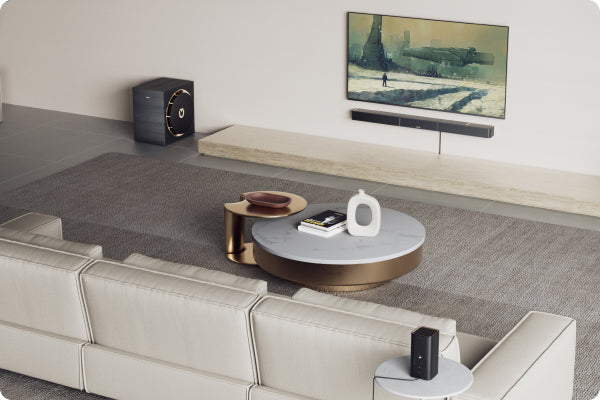
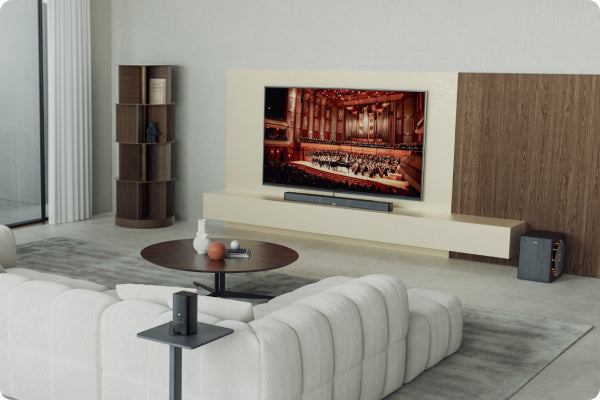
Since up-firing speakers depend on sound reflections, the listening environment is crucial. The best results come from: Ceiling height: Around 2.4–2.7 m (8–9 ft) gives the ideal bounce angle. Ceiling surface: Smooth, flat, and reflective surfaces work best; avoid vaulted, beamed, or heavily textured ceilings. Speaker placement: Position the soundbar level with your TV and centered in front of your seating area. Listening distance: Sitting 2–3 meters away helps reflections hit the right spot. When these conditions are met, modern soundbars can produce overhead effects that sound surprisingly close to what ceiling speakers deliver.
Real-World Example: Ultimea Skywave X Series
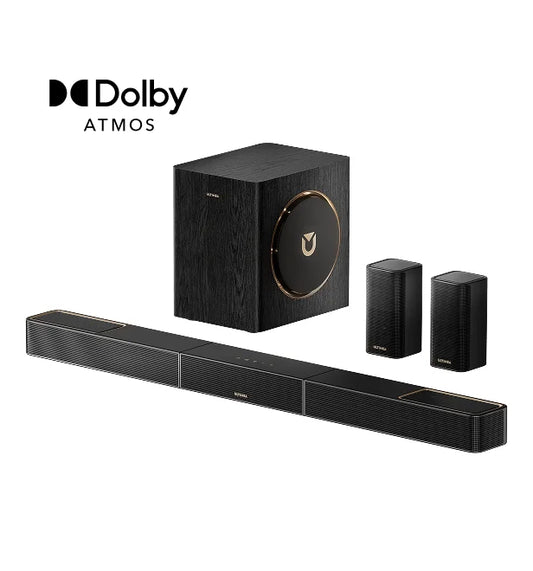
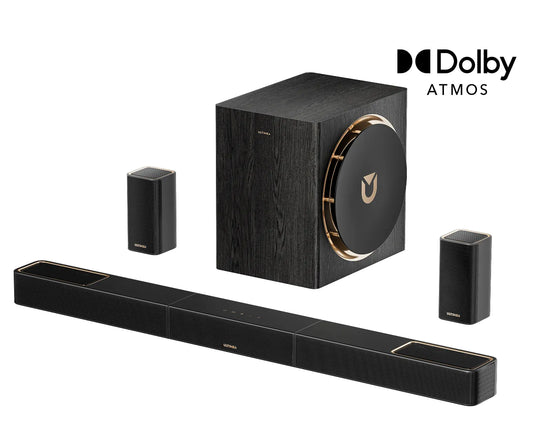
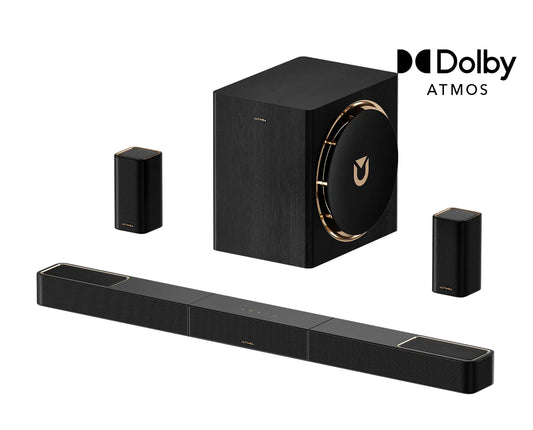
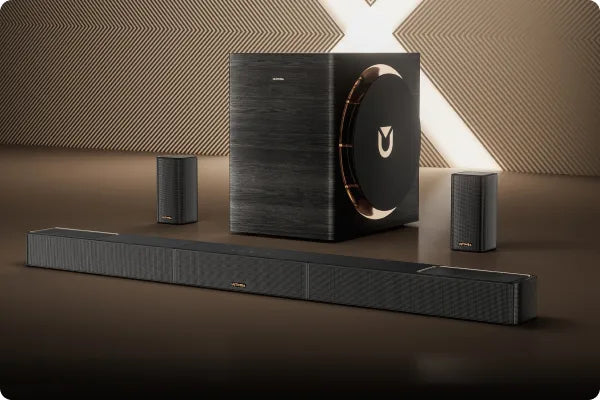
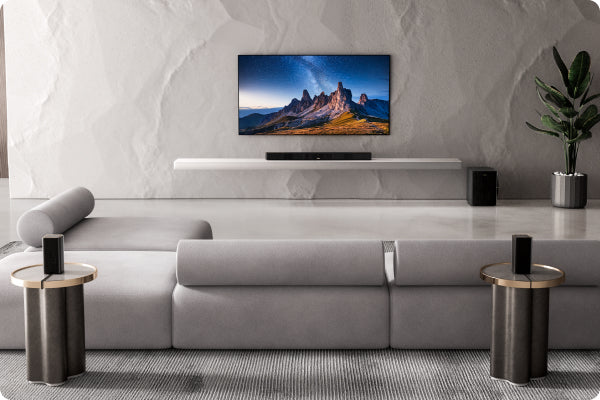
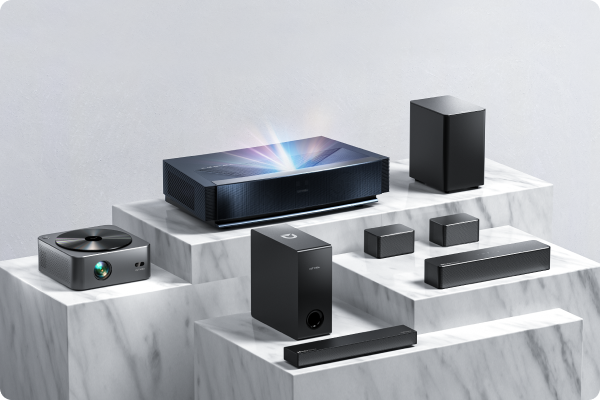
For users who want a Dolby Atmos experience but can’t install ceiling speakers or manage complex wiring, the Ultimea Skywave X Series is a strong example of innovation. Skywave X is Ultimea’s professional-grade, fully wireless surround sound system powered by the NeuralCore processing engine. Its precisely angled up-firing drivers project height information toward the ceiling, while NeuralCore’s intelligent calibration automatically adjusts reflection patterns based on your room’s shape and ceiling distance. The result is a seamless 3D sound field — you can feel rain fall, planes soar, or voices echo from above — all from a sleek, cable-free setup.
Summary: Making Sound Three-Dimensional
Height channels bring a new vertical dimension to home audio, transforming flat sound into full 3D immersion. Traditional setups use ceiling speakers for pinpoint accuracy, while modern soundbars recreate height through reflection, acoustic design, and psychoacoustic processing. Room acoustics play a major role in how convincing the height effect feels. With systems like the Ultimea Skywave X Series, even users who can’t install ceiling speakers can enjoy the magic of “sound from the sky.”