











For renters, students in dorms, or families living in compact apartments, building a home theater can feel out of reach. Limited space, cable clutter, and concerns about disturbing neighbors often stop people from upgrading their setup.
In reality, smaller rooms can actually make immersive sound easier to achieve. With the right equipment and thoughtful placement, even a modest living room or bedroom can become your own private cinema.
This guide walks you through the key considerations and practical solutions for building a home theater in a small space.
The Real Challenges of Small-Space Home Theaters
When designing an audio setup for a compact room, most issues fall into three core areas.
1. Limited Space for Equipment
Traditional surround systems require multiple speakers and extensive wiring. In a small apartment, that can quickly make the room feel crowded and disorganized.
2. Bass That Travels Through Walls
Low frequencies carry easily through floors and shared walls. In apartment living, overly aggressive bass can create tension with neighbors.
3. Installation That Isn’t Rental-Friendly
Drilling into walls and running cables is not ideal for renters. Systems that are difficult to install are also inconvenient to remove when moving.
For smaller homes, the goal becomes clear: compact design, simple installation, balanced sound, and controlled low frequencies.
Why Small Rooms Can Feel More Immersive
Smaller spaces actually offer acoustic advantages that are often overlooked.
1. Sound Fills the Room More Easily
In a compact room, sound reflects off nearby surfaces more quickly. These reflections help create a fuller, more enveloping listening experience without requiring extreme power output.
2. Higher Value for Your Budget
You don’t need large tower speakers or high-powered amplifiers. A well-designed soundbar with a subwoofer can dramatically outperform built-in TV speakers while keeping costs and space usage reasonable.
3. Simpler Setup and Cleaner Layout
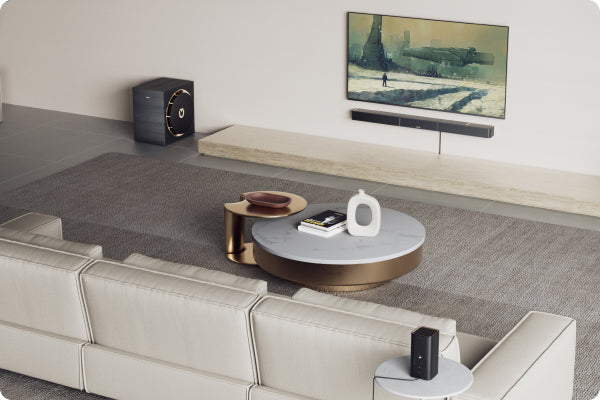
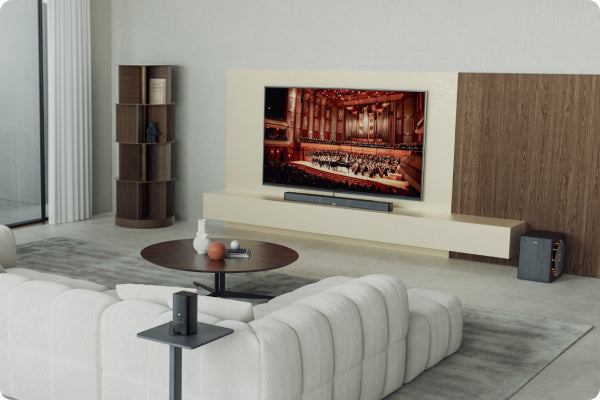
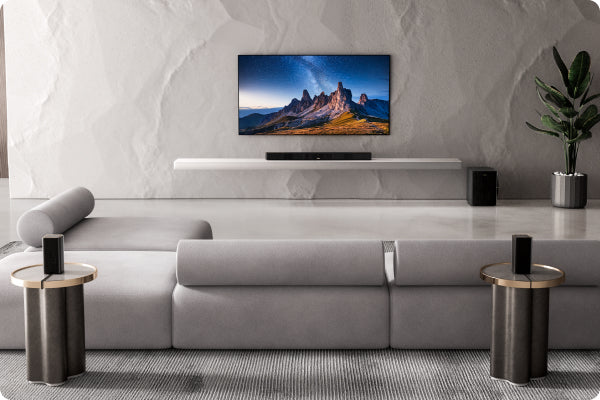
Slim soundbars sit neatly below a TV or mount on the wall. Wireless subwoofers eliminate excessive cabling. The result is a clean, modern look that works well in apartments or bedrooms.
Why a 2.1 Channel Soundbar Makes the Most Sense
In compact environments, simplicity often delivers the best results. A 2.1 channel soundbar provides a balanced approach between performance and practicality.
Key advantages include:
-
A minimal footprint that fits easily on a TV stand or wall mount
-
A wireless subwoofer that reduces visible cables
-
A focused soundstage ideal for close seating distances
-
Controlled bass output that minimizes disturbance
For users who want better sound without overcrowding their space, this configuration offers a smart and efficient upgrade.
Choosing the Right Setup for Your Room
Different small spaces call for slightly different solutions.
-
If space is extremely limited, an all-in-one soundbar delivers clearer audio without adding extra components.
-
If you want deeper bass and a stronger cinematic feel, a soundbar paired with a wireless subwoofer adds dimension without overwhelming the room.
For example, the Ultimea Poseidon M30 is ideal for everyday streaming and TV content, providing fuller sound while remaining subtle. The Ultimea Solo B30 works particularly well in bedroom setups or desk entertainment areas where simplicity matters most.
If you want a more cinematic experience without complicating your layout, the Ultimea Poseidon M40 offers enhanced depth and immersion while staying compact and easy to install.
Ultimea Poseidon M40: Immersive Sound Designed for Smaller Rooms
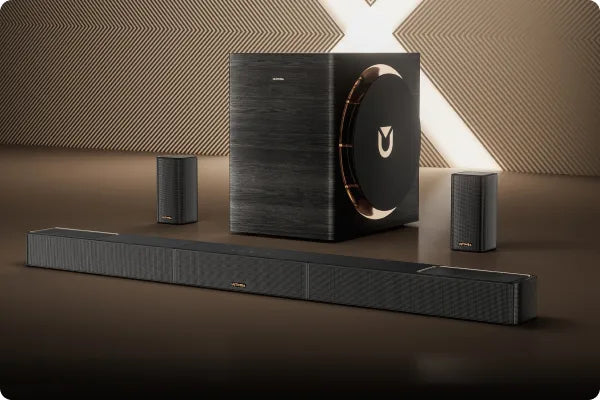
Among compact solutions, the Ultimea Poseidon M40 strikes a strong balance between performance and practicality.
This 2.1 channel soundbar delivers up to 240W peak power and includes a wireless 5.25-inch subwoofer. The result is layered, dynamic sound without consuming valuable floor space. Action scenes gain impact, while dialogue remains clean and intelligible.
It supports HDMI eARC and CEC, allowing high-bandwidth audio transmission and seamless control through your TV remote. Setup remains straightforward and daily operation feels effortless.
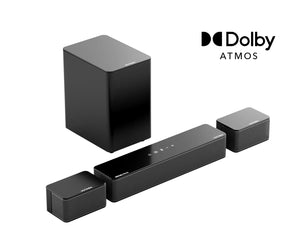
With Dolby Atmos support, the M40 enhances spatial depth through advanced sound processing. Instead of confining audio to the area directly in front of the TV, it creates a more dimensional soundstage. Ambient effects, background details, and dialogue feel more separated and natural.
Simple Placement Tips for Better Results
Even minimal systems benefit from thoughtful positioning.
-
Place the soundbar directly below the TV at seated ear level.
-
Position the subwoofer near a wall to enhance bass response, but avoid placing it directly against a shared neighbor wall.
-
Use night mode when watching late to keep dialogue clear at lower volumes.
-
Keep surrounding surfaces tidy to allow sound to reflect naturally.
Big Experience, Small Footprint
A true home theater experience doesn’t require a massive living room or a complex multi-speaker setup. With smart equipment choices and intentional placement, even a small apartment can deliver immersive and enjoyable movie nights.
If you’re looking for a solution that balances space efficiency, easy installation, and powerful sound, a 2.1 channel soundbar is often the ideal starting point.

